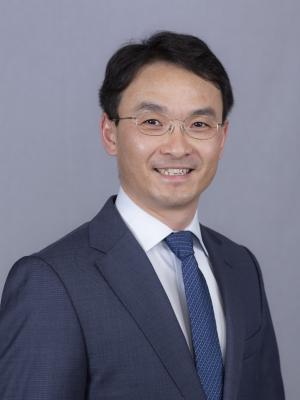
Huansheng Cao
Assistant Professor of Environmental Science, Duke Kunshan University
He studies life at the systems level, systems biology, both computationally and experimentally: what cellular life is and how it holistically and dynamically responds to internal and external perturbations through the exchange of mass and energy with its environment. His teaching is guided by a unifying definition of life: a fully autonomous, self-sustaining chemical system capable of Darwinian evolution. From this perspective, life is understood as a physical system composed of organic polymers, structured and governed by biological rules, and powered by chemical processes. At DKU, he teaches courses on biology, systems biology, bioinformatics and computational biology, and conservation.
His research lies in systems biology, encompassing both theoretical development and applied research across multiple fields. His work in theoretical systems biology focuses on building conceptual and mathematical frameworks by uncovering general principles and operational rules that govern biological systems. This approach is pursued through multi-omics integration grounded in genome-scale metabolic networks. He further applies systems biology to diverse research areas, including cancer biology (with a current focus on brain tumors, particularly glioblastoma multiforme), antiviral drug discovery, the adaptive resilience of polar-region microbes under global warming, and the mechanisms driving cyanobacterial blooms.
Cao earned a B.Sc. in Biochemistry from Yantai University and a Ph.D. in Cell and Molecular Biology from Fordham University. Prior to joining Duke Kunshan University, he served as an Assistant Research Professor at Arizona State University.